
Dry needling, demystified
What dry needling is, how it fits into a physiotherapy plan, and what a session actually feels like.
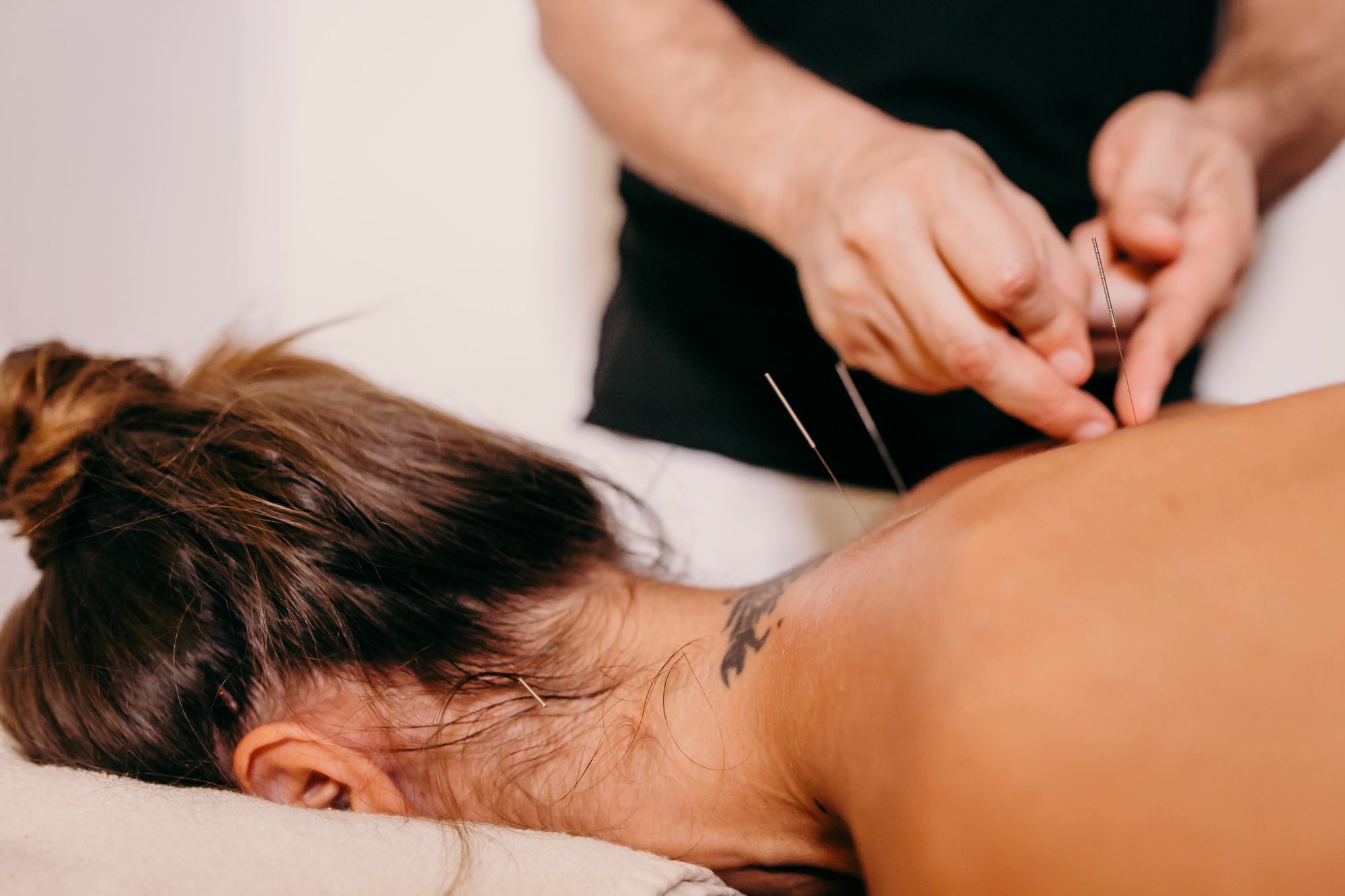
Dry needling can sound more dramatic than it feels. For many people it becomes one quiet part of a physiotherapy plan, used alongside hands-on care, movement, and breath. Here is a clear look at what it is, how it fits into physiotherapy at our Downtown Kelowna space, and what a session is actually like.
What dry needling is
Dry needling uses very fine, sterile, single-use needles placed into specific points in muscle and surrounding tissue. It is called “dry” because nothing is injected.
It is guided by a physiotherapist’s assessment of how you move, where you feel symptoms, and what is driving them. Although the needles look similar to acupuncture needles, dry needling is grounded in Western anatomy and clinical reasoning, and it is always part of a broader physiotherapy plan.
One tool in the plan, not the plan itself.
Who offers it at The Well Haus Collective
Dry needling at the Haus is offered by Georgia Grenier, a Registered Physiotherapist. Georgia completed her Master of Physical Therapy and Bachelor of Kinesiology at the University of British Columbia, and has continued her training in clinical pilates, dry needling, manual therapy, and the BradCliff Breathing Method (Level 1).
How it fits into a physiotherapy plan
Physiotherapy at The Well Haus Collective blends manual therapy, clinical pilates, dry needling, intentional breath, and personalized exercise. The aim is to uncover the “why” behind your symptoms and support meaningful, long-term change.
Dry needling is never the whole story. If it is a good fit for you, it might be used to help settle tissue so that the movement and strength work that follows feels easier to do. If it is not a good fit, there are many other ways forward, and you can always say no.
What a session feels like
Your physiotherapist will explain what they recommend and why, and check that you are comfortable before anything begins.
As each needle goes in, most people feel a quick, small prick, or nothing at all. When the needle reaches a tight or sensitive spot, you may feel a dull ache, a sense of pressure, or a brief twitch in the muscle. These sensations usually pass quickly.
You are always in control. Say how it feels, and treatment can be adjusted or stopped at any time.
Moving well in the Okanagan
So much of life in Kelowna happens outdoors. Whether you are getting back to the trails, the slopes, or the lake, or simply moving through your workday with more ease, the goal of physiotherapy is the same: helping your body do what you want it to do, with confidence.
Aftercare
It is common to feel some soreness for a day or two afterwards, similar to the feeling after a hard workout. Gentle movement, a warm shower, and following the exercises from your session usually help.
Tell your physiotherapist before treatment if you are pregnant, have a bleeding disorder or take blood thinners, have a fear of needles, or have any other health conditions, so you can decide together what is right for you.
If you are looking for physiotherapy in Kelowna and want to know whether dry needling could be part of your plan, you can book with Georgia at The Well Haus Collective on Doyle Ave in Downtown Kelowna.
This article is general information, not medical advice. Speak with your physiotherapist or health care provider about your own situation.
Find your time.
Book with the practitioners in the Collective who offer this work.
Dry Needling
About Physiotherapy →-

Massage, physio or osteopathy: which one do I book?
How registered massage therapy, physiotherapy and manual osteopathy differ, and how to choose where to start.
Deep tissue or relaxation: choosing your massage
How deep tissue and relaxation massage differ, what each feels like, and how to choose the one that fits what you need.

Your first RMT massage: what to expect
What happens at a first registered massage therapy appointment, from the intake form to aftercare, and how to get the most from it.