
Craniosacral therapy: the art of light touch
What craniosacral therapy is, how it fits alongside massage therapy, and what a session feels like.
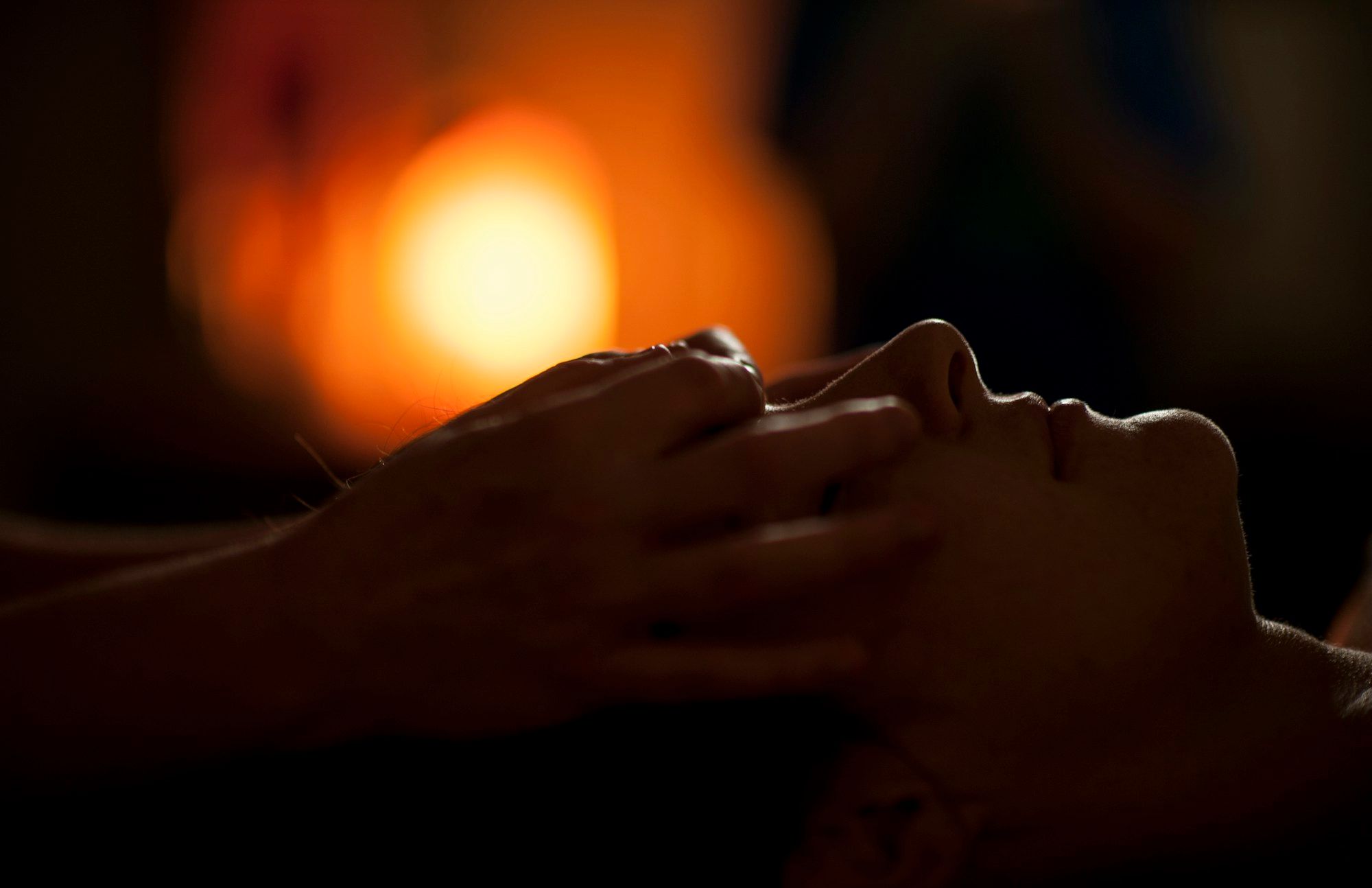
Some of the most meaningful work in a treatment room is also the quietest. Craniosacral therapy is gentle, slow, and often surprising to people who expect massage to mean deep pressure. At our Downtown Kelowna space it is offered within massage therapy, so here is what it is, how it fits alongside massage, and what to expect if you book a session that includes it.
What craniosacral therapy is
Craniosacral therapy is a gentle, non-invasive, hands-on technique. It focuses on the craniosacral system: the membranes, called the meninges, and the cerebrospinal fluid that surround and protect the brain and spinal cord.
Using very light touch, a trained therapist assesses this system and works to release restrictions in it and in the surrounding fascia. The pressure is often described as no heavier than the weight of a coin.
Gentle does not mean passive. Light touch asks the body to listen.
Who offers it at The Well Haus Collective
Craniosacral therapy at the Haus is offered by Lorna Wilson, a Registered Massage Therapist with the College of Complementary Health Professionals of BC.
Lorna trained through the Upledger Institute, which teaches craniosacral therapy in progressive levels. She holds certification in Craniosacral Therapy I, which covers assessment of the central nervous system and fascia for a full-body treatment protocol, and Craniosacral Therapy II, which moves beyond the dura to assessing acute and chronic conditions.
What happens in a session
Every session starts with a conversation about what brings you in, your history, and what you would like from the time together. From there, treatment is shaped around you.
You lie comfortably on the treatment table while your therapist uses light, still contact, often at the head, neck, spine, and sacrum. Many people find the stillness itself unfamiliar at first. There is nothing you need to do except breathe and notice.
It is normal to feel very relaxed, a little sleepy, or simply quiet. Some people notice warmth or a sense of release; others notice very little in the moment and more in the hours after.
How it fits with massage therapy
Craniosacral work is one tool among many, not a separate kind of appointment. Lorna uses it alongside Swedish massage, deep tissue therapy, myofascial release, neuromuscular techniques, trigger point therapy, PNF stretching, and joint mobilizations.
That means a session can be mostly craniosacral, mostly massage, or a blend of both, depending on what your body needs that day. Her practice has a particular focus on nervous system regulation and the effects that stress and trauma can have on the body.
Slowing down in the Okanagan
Life in Kelowna tends to be lived at full speed. Lake days, ski days, trail days, and the desk days in between all leave their mark on the body. Sometimes what the body needs is not more pressure, but a chance to settle.
Questions to ask before booking
- Would craniosacral work suit what I am coming in for, or would other techniques be a better fit?
- How might it be combined with massage in my session?
- What should I expect to feel during and after treatment?
If you are not sure, book a massage therapy session with Lorna and mention your interest, and you can talk it through at the start. You will find us at The Well Haus Collective on Doyle Ave in Downtown Kelowna.
This article is general information, not medical advice. Speak with your health care provider about any health concerns.
Find your time.
Book with the practitioners in the Collective who offer this work.
Craniosacral Therapy
View all our massage therapists →-

Deep tissue or relaxation: choosing your massage
How deep tissue and relaxation massage differ, what each feels like, and how to choose the one that fits what you need.
Your first RMT massage: what to expect
What happens at a first registered massage therapy appointment, from the intake form to aftercare, and how to get the most from it.

Is RMT covered? Using your benefits for massage
How extended health benefits usually work for registered massage therapy in BC, what to check in your plan, and how direct billing helps.